Postdoctoral Research Associate (PDRA) Centre for Advanced Instrumentation(CfAI), Durham university, UK
Intro
Experimental physicist with expertise in instrumentation development and laboratory measurements for astronomy. My work spans nearly seven orders of magnitude in wavelength, from decameter radio waves to sub micrometer-scale optical systems.
I strongly believe that progress in the natural sciences is ultimately driven — and constrained — by laboratory work, and this experimental foundation is what most motivates me as a researcher.
As I grow older, the human side of science has become increasingly important to me. For this reason, I have also become interested in Earth science and remote sensing of environmental processes, alongside dedicating part of my time to public service and outreach activities.
Research
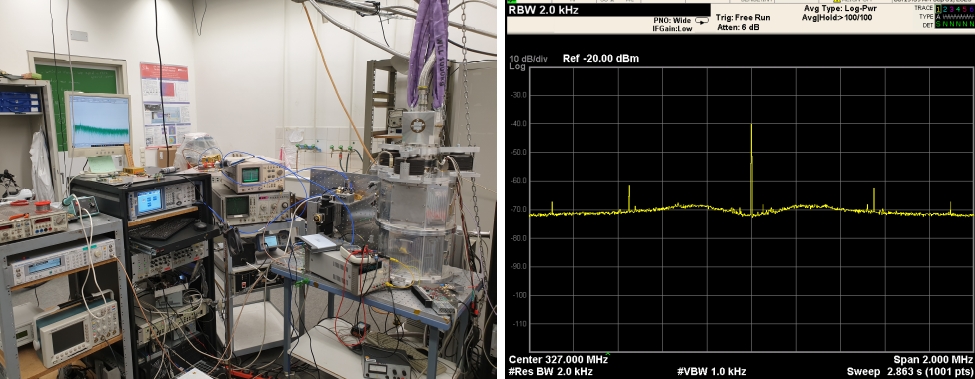
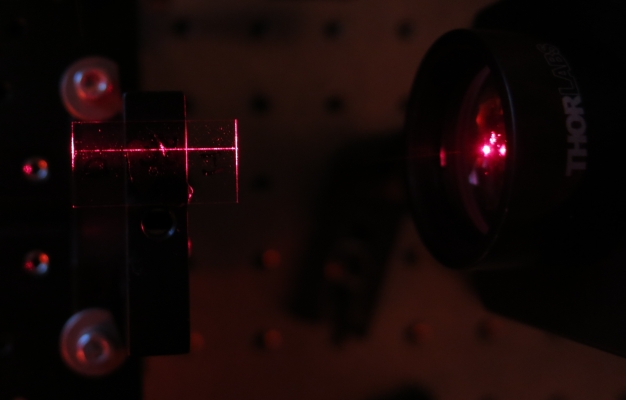
Quantum Cascade Laser (QCL) phase locking The highest level of frequency stabilization is achieved when the phase of a laser follows — or is locked to — the phase of a reference oscillator. As part of my work, I phase-locked a 4.7 THz Quantum Cascade (QC) laser, reducing its linewidth from approximately 10 MHz to below 1 kHz.
Most interestingly, the experiment remained robust even under very low signal-to-noise conditions, operating successfully at only 1 dB above the noise floor with a 3 MHz spectrum-analyzer resolution bandwidth. Read more in Mahdizadeh et al. 2026
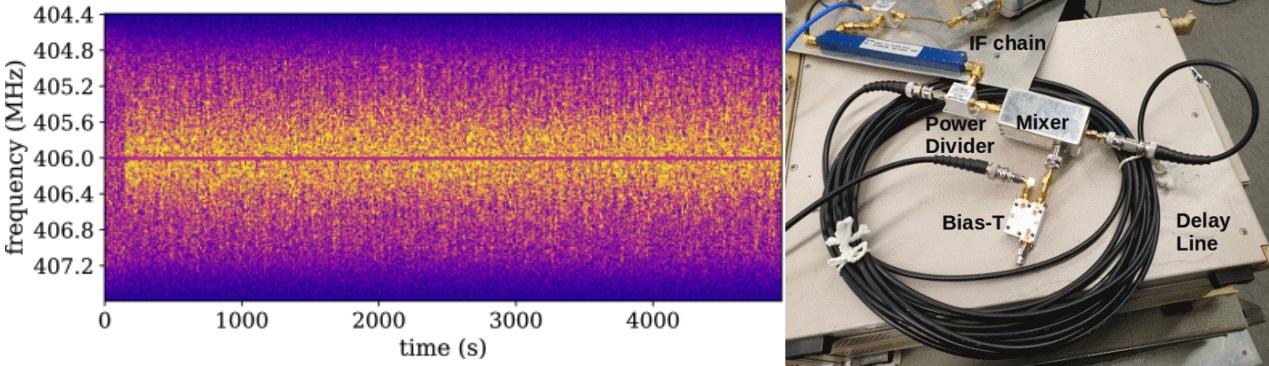
QCL frequency stabilization A Michelson interferometer with unequal arm lengths acts as a frequency discriminator: when the laser frequency (or wavelength) varies, the intensity of the output fringe changes accordingly.
This principle formed the basis of the delay-line frequency discriminator shown above (the 10 m long black cable), which I used to frequency stabilize the 4.7 THz Quantum Cascade (QC) laser to a linewidth of 780 kHz.
Read more in Mahdizadeh et al. 2023
Laser characterizatin my Ph.D. goal was to frequency stabilize a 4.745 THz Quantum Cascade (QC) laser. These novel lasers, developed by the Quantum Electronics group at ETH Zurich, first needed to be carefully characterized in terms of their emission frequency and tuning behavior versus current and temperature. This characterization was often performed using methanol absorption spectroscopy, by matching the measured spectra to the JPL molecular database, alongside Fourier Transform Spectroscopy for broader frequency determination.
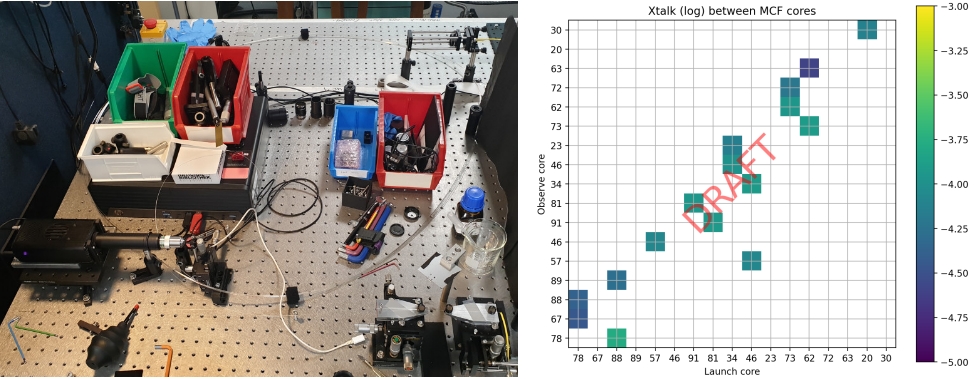
Multi-Core Fiber (MCF) the fibre link in the Multi-Core Fiber Integral Field Unit (MCIFU v2) was designed around a Multi-Core Fiber (MCF) acting as a single-mode imaging fibre, transferring the focal-plane image from the MagAO-X adaptive optics and coronagraph instrument on the Magellan Clay Telescope to the spectrograph.
In one of the designs, I developed a hexagonal-grid MCF with dissimilar cores of radii 2.36, 2.14, and 1.94 µm, with an initial Numerical Aperture (NA) of 0.16. We later adopted a more conservative NA of 0.14 and incorporated coupled-power theory into the design framework. I also successfully measured crosstalk in the manufactured fibre to better than
10^−6. (Mahdizadeh et al. 2026, in preparation).
Photonic Reformatter The reformatter is the photonic chip within our fibre link that reformats the 2D hexagonal arrangement of the Multi-Core Fiber (MCF) cores into a slit geometry feeding the spectrograph input. For the MCIFU v2 project, I designed the reformatter using RSoft/BeamPROP simulations.
The current design is a 21 mm long device that reformats 117 MCF cores into an output slit, with each waveguide separated by 30 µm from its neighbor. The waveguides are inscribed into a fused-silica glass chip using Ultrafast Laser Inscription (ULI). I am currently incorporating feedback from ULI collaborators — including waveguide propagation and bend-loss measurements — to finalize the reformatter design. (Mahdizadeh et al. 2026, in preparation).
Gas spectroscopy A heterodyne emission spectrometer was a natural extension of my Ph.D. experimental setup. We developed it to detect faint emission from a GaAs/AlGaAs superlattice diode acting as a harmonic generator, producing 4.745 THz as the 26th harmonic of a 182.5 GHz signal generated by a diode multiplier chain.
A valuable byproduct of these experiments was high-resolution emission spectroscopy data from the CH3OH (methanol) molecule, whose rich and complex spectral structure offers significant opportunities for further study. (Mahdizadeh et al. 2027, in prepration).
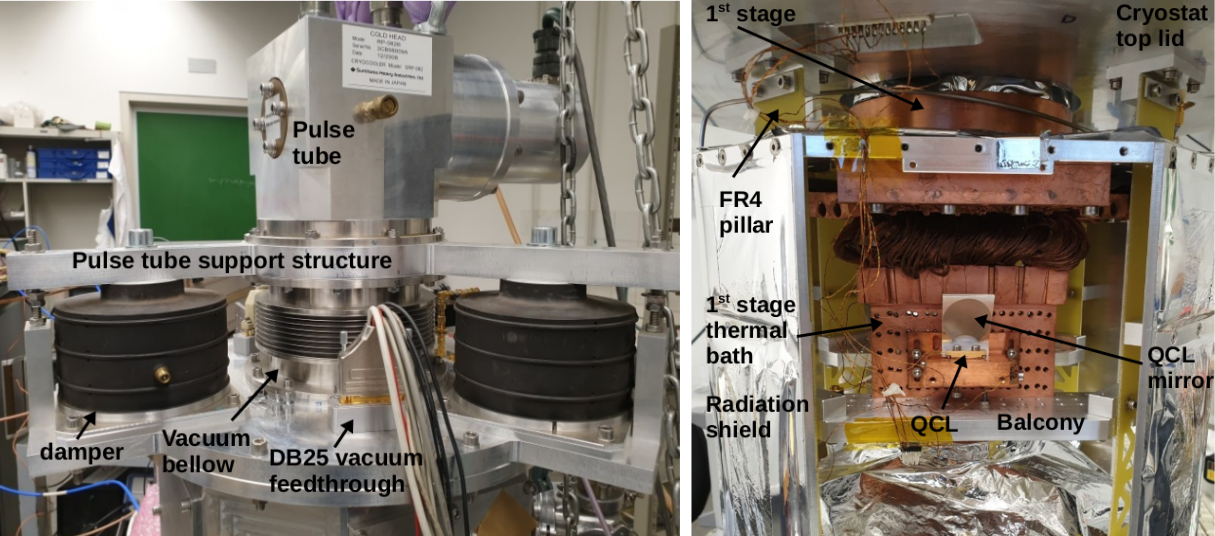
Cryostat The cryostat reached a record base temperature of 3.1 K under radiation thermal load only, and operated at 4.2 K under full experimental loading, including both radiation and LNA thermal dissipation.
A distinctive feature of this cryostat was that it provided access to both the first and second stages of the Sumitomo Heavy Industries cryocooler. In my experiments, the first stage hosted the Quantum Cascade Laser (QCL) at approximately 33 K while dissipating around 2 W of thermal power, while the second stage housed the superconducting Hot Electron Bolometer (HEB) heterodyne detector operating at 4.2 K.
Mechanical vibration control from the pulse-tube cryocooler was an important aspect of the cryostat design. I was involved in the cryostat design process, and later integrated and operated the system throughout the final four years of my Ph.D. work.
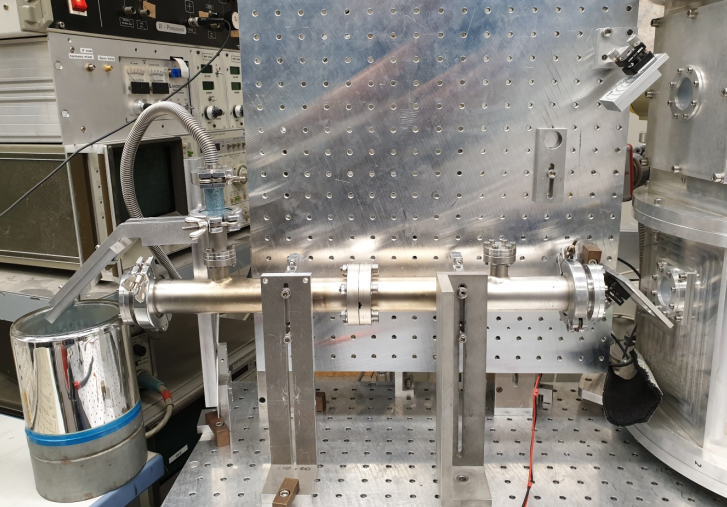
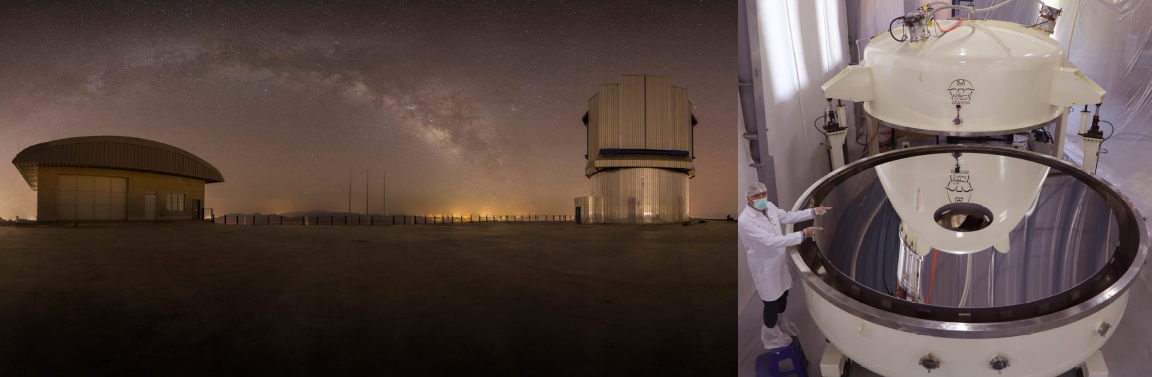
Coating plant My M.Sc. project focused on the functional design of a telescope-mirror coating plant. Following a series of chemical and plasma-cleaning stages, the system was designed to deposit a 100 nm thick aluminum coating onto a three-meter telescope mirror blank with a uniformity of 5%.
I designed the vacuum system to achieve a high-vacuum environment of 10^−7 torr inside the chamber, and developed the coating approach based on thermal evaporation using 80 tungsten filaments.
Sharif Astronomical Spectrometer For my B.Sc. project, I led a team of five through the complete lifecycle of an instrumentation project: from proposal writing and securing $13k of funding from the Ministry, to design, manufacturing, testing, and on-sky commissioning.
The instrument was a long-slit spectrograph using a diffraction grating, achieving a spectral resolving power of 2000 over the wavelength range of 380–760 nm. The system was optimized for operation with the 8-inch telescope of the Physics Department at Sharif University of Technology.
Beyond the lab
This section is still evolving. Beyond my main research work, I have always enjoyed building smaller projects driven either by necessity, curiosity, or personal interest.
These include the RadioJOVE project from my early years, a compact pyroelectric detector for mm-wave and THz measurements developed for the receiver group during my Ph.D.,
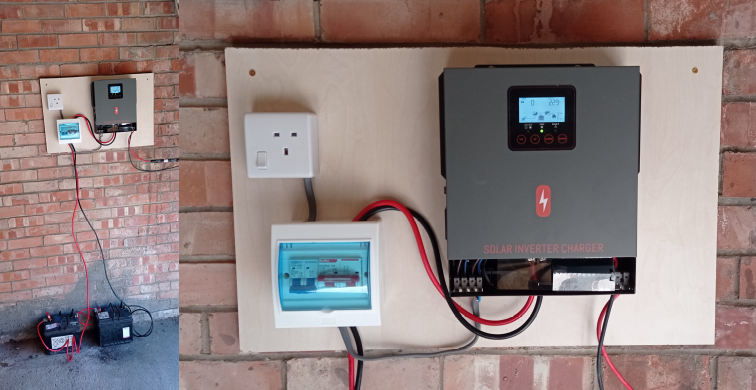
a 23 GHz waveguide filter designed as part of my doctoral research, and two home solar-power systems that now provide renewable energy for my family, and another for a friend.
Service
This section is still evolving. In my view, science must remain connected to society, and we have a responsibility to be open and accountable to the public.
This is essential in our collective fight against ignorance, but also simply the right thing to do: to have even a small positive effect on the lives of others whenever we can.
For this reason, I dedicate part of my time to community service through student mentoring and public outreach activities.
It is always heartwarming to see my name acknowledged in a student’s thesis, or to hear a rural child ask, after a day of science experiments, whether we will come back again.
In 2025, I led the ZagrosRISE public outreach project, focused on solar energy and the Sun for rural communities in the Zagros region (along with several additional sites). The project aimed to foster sustainable change by integrating renewable energy and community education.
Read more: IAU OAD ZagrosRISE project
ZagrosRISE short report:
Contact
I am always happy to discuss instrumentation, spectroscopy, astronomy, photonics and optics, experimental physics, outreach, and interdisciplinary collaborations:
sajjad dot mahdizadeh at durham dot ac dot uk
Elements
Text
This is bold and this is strong. This is italic and this is emphasized.
This is superscript text and this is subscript text.
This is underlined and this is code: for (;;) { ... }. Finally, this is a link.
Heading Level 2
Heading Level 3
Heading Level 4
Heading Level 5
Heading Level 6
Blockquote
Fringilla nisl. Donec accumsan interdum nisi, quis tincidunt felis sagittis eget tempus euismod. Vestibulum ante ipsum primis in faucibus vestibulum. Blandit adipiscing eu felis iaculis volutpat ac adipiscing accumsan faucibus. Vestibulum ante ipsum primis in faucibus lorem ipsum dolor sit amet nullam adipiscing eu felis.
Preformatted
i = 0;

while (!deck.isInOrder()) {
    print 'Iteration ' + i;
    deck.shuffle();
    i++;
}

print 'It took ' + i + ' iterations to sort the deck.';